
The Science of Lip Skin: Why Your Lips Dry Out Faster (and What to Do About It)
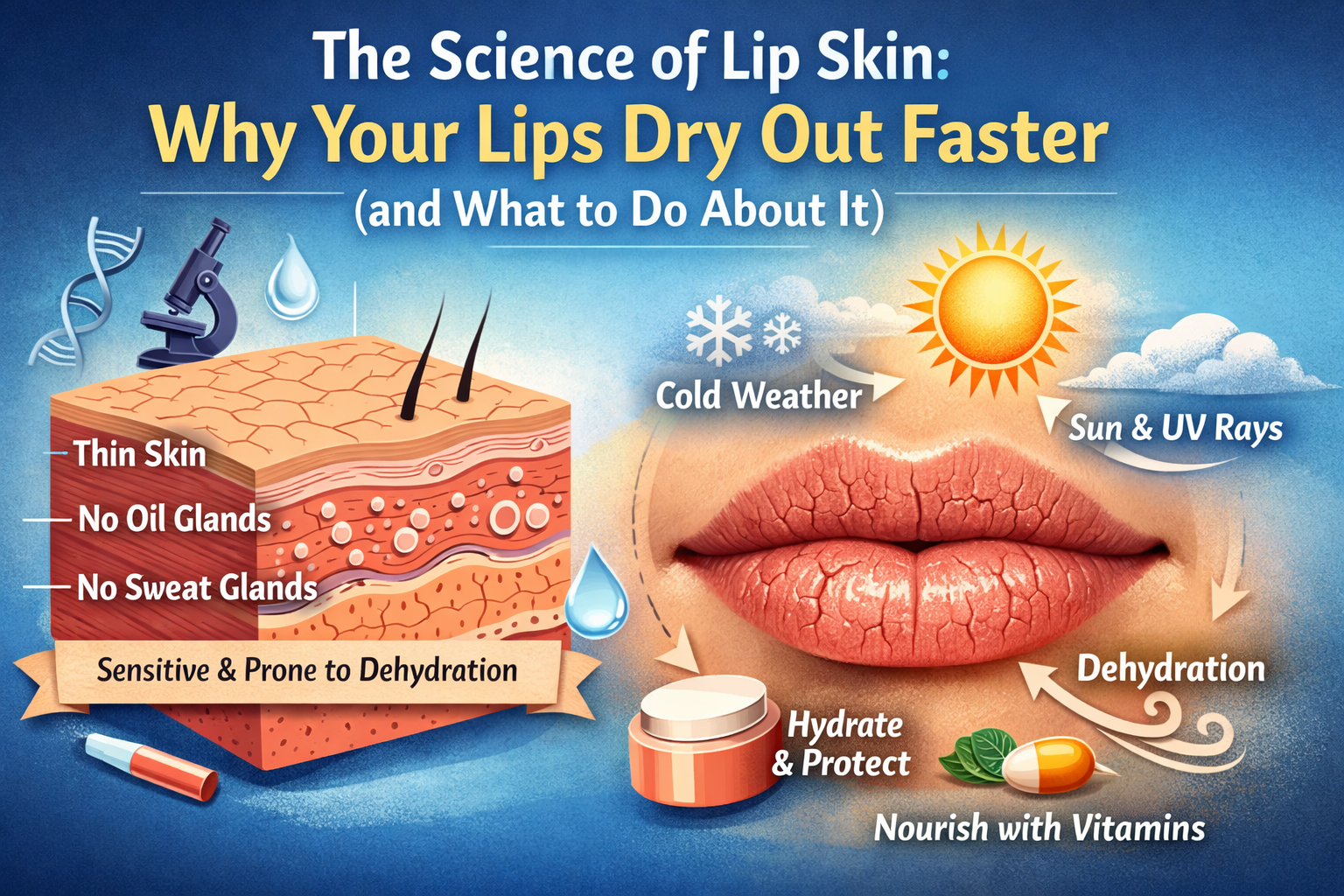
When it comes to skincare, most people focus on their face—cleansers, serums, moisturizers, SPF. But there’s one small area that often gets overlooked… until it’s dry, cracked, or uncomfortable: your lips.
Here’s the truth—your lips are not like the rest of your skin. They’re more delicate, more vulnerable, and require a completely different kind of care.
If you’ve ever wondered why your lips seem to dry out faster than everything else—especially in colder months or after wearing certain products—this isn’t random. It’s science.
Let’s break it down so you can understand what your lips actually need—and why a proper lip care routine isn’t optional, it’s essential.
Your Lips Are Structurally Different
The skin on your lips is fundamentally different from the skin on the rest of your body. While your face has multiple layers designed to protect, retain moisture, and regenerate, your lips are working with much less.
Your lips have:
Fewer layers of skin
No oil glands
Minimal natural protection
This combination makes them one of the most fragile areas of your body.
That soft, smooth feel we associate with healthy lips? It doesn’t come from your body doing all the work—it comes from intentional care.
Lips Have No Oil Glands
One of the biggest reasons your lips dry out so quickly is simple: they cannot moisturize themselves.
The rest of your skin contains sebaceous glands, which produce natural oils (sebum). These oils help:
Lock in moisture
Protect against environmental damage
Maintain softness and elasticity
Your lips? They don’t have these glands at all.
That means:
No natural oil barrier
No built-in moisture retention system
No protection from dryness
So when moisture leaves your lips—and it will—there’s nothing there to replace it.
This is why lip products aren’t just “extra.” They’re necessary.
Without external hydration and protection, your lips are left exposed to everything: dry air, wind, sun, and even the simple act of talking or breathing.
Lip Skin Is Much Thinner
Another reason lips are more prone to dryness is their thickness—or lack of it.
Lip skin is significantly thinner than the skin on your face. In fact, it’s so thin that it’s part of the reason your lips appear pink or red. You’re actually seeing blood vessels beneath the surface.
While that gives lips their natural color, it also means:
Less protection from environmental stress
Faster moisture loss
Increased sensitivity
Thin skin = faster damage.
This is why lips can go from soft to cracked in what feels like overnight, especially during colder seasons or after dehydration.
Why Moisture Escapes So Fast
Now let’s connect the dots.
Your lips:
Don’t produce oil
Have thinner skin
Are constantly exposed
This creates the perfect environment for something called transepidermal water loss (TEWL).
TEWL is the process where water evaporates from your skin into the environment. It happens everywhere on your body—but on your lips, it happens much faster.
Why?
Because there’s no oil barrier to slow it down.
So instead of holding onto moisture, your lips lose it quickly—sometimes within minutes of exposure to dry air or harsh conditions.
This is also why licking your lips makes things worse.
It feels like temporary relief, but saliva actually evaporates quickly and takes even more moisture with it, leaving your lips drier than before.
The Role of Exfoliation (and Why It Matters More Than You Think)
When lips become dry, they don’t just lose moisture—they start to build up dead skin.
This can look like:
Flaking
Peeling
Rough texture
Uneven color
Here’s where most people go wrong: they try to fix dry lips by applying more balm on top of dead skin.
But if that layer of buildup is still there, your products can’t fully penetrate.
That’s where exfoliation comes in.
Gentle lip exfoliation:
Removes dead skin cells
Smooths the surface
Allows moisture to absorb properly
Improves the overall look and feel of your lips
Think of it like prepping a canvas—if the surface isn’t smooth, nothing you put on top will look or feel right.
But here’s the key: exfoliation should be gentle and intentional.
Over-exfoliating can damage the already thin lip barrier, making dryness worse instead of better.
A balanced routine is what makes the difference.
Why Lip Care Isn’t “Extra”—It’s Essential
Understanding the science of your lips changes how you approach caring for them.
Lip care isn’t about vanity—it’s about supporting a part of your body that literally cannot support itself.
A proper lip routine should include:
1. Exfoliation (2–3 times per week)
To remove dead skin and improve texture.
2. Hydration (daily)
To replenish lost moisture.
3. Protection (throughout the day)
To prevent moisture loss from environmental exposure.
Without all three, you’re only addressing part of the problem.
Environmental Factors Make It Worse
Even if you’re doing everything right, your environment plays a huge role in lip health.
Common triggers for dry lips include:
Cold weather
Indoor heating
Sun exposure
Dehydration
Certain lip products (especially matte formulas)
Each of these increases moisture loss, meaning your lips need even more support during these times.
The Bottom Line: Your Lips Need Intentional Care
Once you understand the science, it becomes clear:
Your lips are designed to need help.
They’re not “low maintenance.”
They’re not “self-sufficient.”
They are delicate, exposed, and dependent on what you give them.
So if you’ve been dealing with constant dryness, cracking, or dull-looking lips, it’s not because you’re doing something wrong—it’s because you haven’t been taught what your lips actually need.
Now you know.
Your New Lip Care Mindset
Instead of reacting to dryness, start preventing it.
Instead of layering product, start with a routine.
Instead of guessing, move with intention.
Because soft, smooth, healthy lips aren’t just about what you use—they’re about understanding the science behind why it works.
And that’s where real results begin.